Uae Work
Museum of the Future puts practical skills first in visitor-team recruitment
The Future Perfects campaign assesses communication, imagination and problem-solving through recorded auditions and practical visitor-interaction scenarios.
Dubai’s Museum of the Future is using an audition-led recruitment process to find staff for a new visitor experience planned for 2027. Its Future Perfects campaign puts communication, active listening, storytelling and adaptability ahead of a conventional emphasis on academic qualifications and previous employment. Candidates do not need prior experience in museums or customer service to be considered.
For people seeking work in the UAE, the initiative provides a route to demonstrate abilities that a CV may not fully capture. For employers, it illustrates how a skills-first approach can shape the selection process itself, rather than simply changing a job advertisement. Applicants progress from a recorded audition to practical assessments and a final panel audition, with successful candidates joining the museum’s visitor experience team in full-time roles and receiving specialised training.
What the Future Perfects role involves
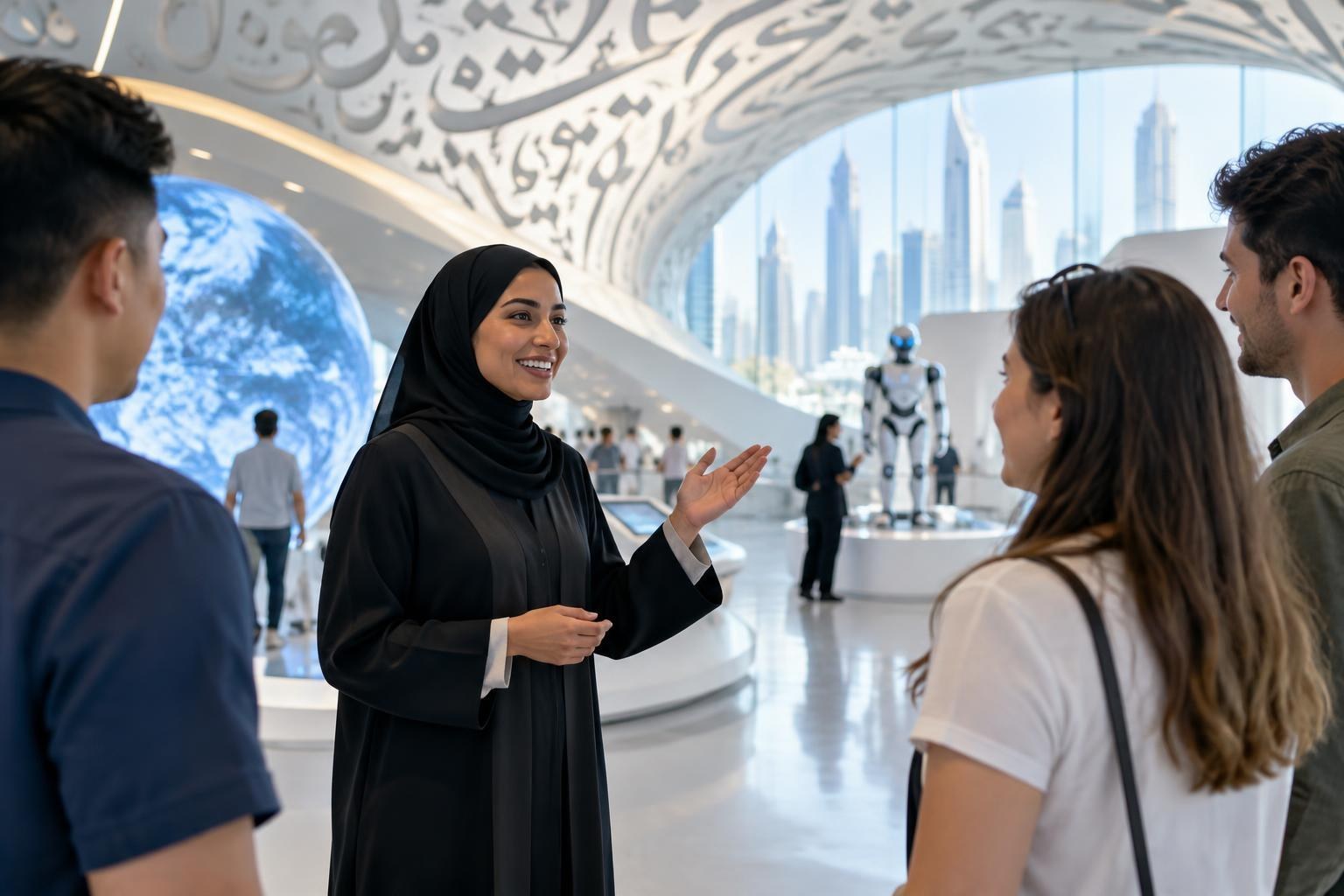
The role brings together visitor guidance, storytelling, dialogue, active listening and problem-solving. Its purpose is to help people explore ideas about the future and connect those ideas with their own interests and everyday lives.
That makes the work more than presenting information. Staff need to understand what interests a visitor, explain potentially unfamiliar concepts and adapt their approach as an interaction develops. Communication and emotional intelligence are central to that exchange.
The setting adds an important cross-cultural dimension. Since opening in 2022, the Museum of the Future has welcomed more than five million visitors from over 180 nationalities. Its visitor experience team therefore works with people who bring different perspectives, expectations and levels of familiarity with scientific and future-oriented subjects.
Successful candidates will join the visitor experience team in full-time positions and receive specialised training ahead of the new experience in 2027.
Who the campaign is designed to reach
Applications are open to people from varied professional backgrounds, with no requirement for previous museum or customer-service experience. The recruitment approach prioritises human capabilities and practical skills over conventional academic qualifications and employment history.
For jobseekers considering a move into visitor-facing work, that distinction matters. A previous job title is not the only way to demonstrate an ability to listen, explain an idea, solve a problem or respond constructively to an unfamiliar situation.
The campaign does not make experience irrelevant. Rather, it changes the emphasis of assessment: candidates have an opportunity to show what they can do instead of relying primarily on the credentials and roles listed on a CV. The practical question becomes how effectively their abilities translate into a visitor interaction.
How the audition-based selection works
The process begins with a recorded audition submitted through the online application. No advance preparation is required for that audition; it is intended to reveal candidates’ personalities, imagination and ways of thinking.
Shortlisted applicants then move to in-person assessments built around scenarios inspired by real visitor interactions. The final stage involves auditions before a panel of experts and specialists.
Together, these stages move the assessment beyond written career history. The recorded element gives candidates space to express themselves, while the in-person scenarios bring the evaluation closer to the situations the visitor experience team handles.
Interactive audition platforms have also formed part of the wider campaign at Virgin Megastore, Roxy Cinemas and Dubai Design Week. These give participants a way to explore their abilities in a setting different from a traditional job interview.
- Online application with a recorded audition.
- In-person visitor-interaction scenarios for shortlisted applicants.
- Final auditions before an expert panel.
What jobseekers can take from the skills-first approach
The most useful distinction for applicants is between naming a skill and demonstrating it. Saying that you are a strong communicator is different from making an unfamiliar idea understandable. Describing yourself as adaptable is different from responding thoughtfully when a conversation changes direction.
Because the role combines explanation with listening, a polished presentation alone is not the whole picture. Understanding another person’s perspective, making room for questions and finding a meaningful connection to an idea are also relevant to the work.
The campaign’s emphasis on imagination and personality creates an opening for applicants whose potential may not be obvious from a conventional CV. It also gives candidates a clearer view of the abilities being assessed: communication, storytelling, active listening, problem-solving and a positive response to different situations.
What UAE employers can learn from the recruitment design
For employers, the practical lesson is that skills-first hiring requires more than changing the wording of a vacancy. The method used to assess candidates needs to give them a genuine opportunity to demonstrate the abilities the job requires.
This campaign connects the work to the selection process: a role built around human interaction is assessed partly through interaction-based scenarios. That alignment offers a useful model for employers reviewing whether their interviews capture the capabilities they actually need.
The approach also separates existing sector experience from the potential to perform a role. Opening consideration to people from different backgrounds can bring a wider range of candidates into view, while practical assessment helps keep attention on relevant abilities.
Specialised training is another part of the model. Recruitment identifies potential, and preparation for the new visitor experience continues after selection rather than depending entirely on candidates arriving with museum-specific experience.
Campaign dates and the scale of interest
Future Perfects launched on 21 October 2026, with an application deadline of 8 November 2026 through the official campaign website. The recruitment is linked to the new visitor experience planned for 2027.
Within the campaign’s first 48 hours, the museum received 20,000 completed applications and its website recorded 42,000 visits. Those figures describe early application activity and website traffic, not the number of positions available.
For jobseekers and employers alike, the initiative offers a concrete example of a different hiring emphasis: defining the human capabilities a role needs, creating opportunities to demonstrate them and supporting selected candidates with role-specific training.
Go to the source
Sources
Requirements and processes can change. These additional resources can help you find the latest details relevant to your situation.